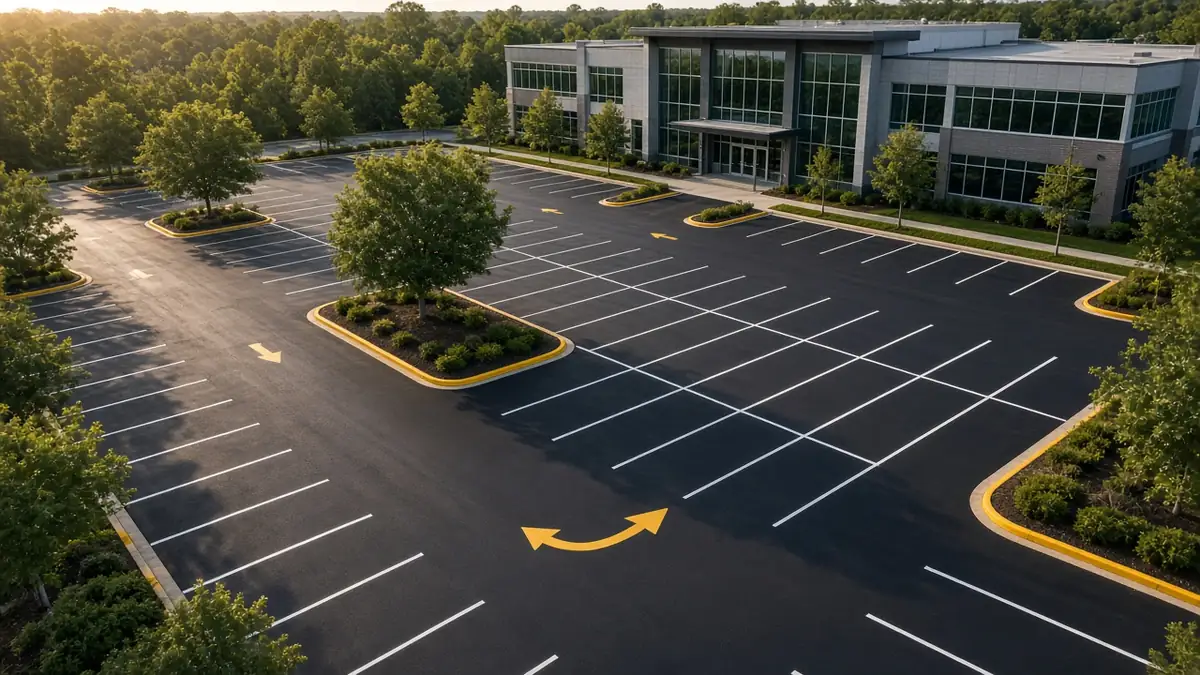
Sealcoating services around Huntsville
Pavement maintenance is a sequence: repair, seal, then stripe. Here's more on each step and what to share so a contractor can quote accurately.
Sealcoating
Sealcoating applies a protective layer over asphalt to shield it from sun, water, oil and fuel. Proper prep matters most: the surface must be clean and dry, oil spots treated so sealer will bond, and cracks filled beforehand. Two coats are common on drive lanes and entrances where traffic is heaviest.
Ask how long the lot needs to stay closed. Cure time depends on temperature, humidity and product.
Crack filling
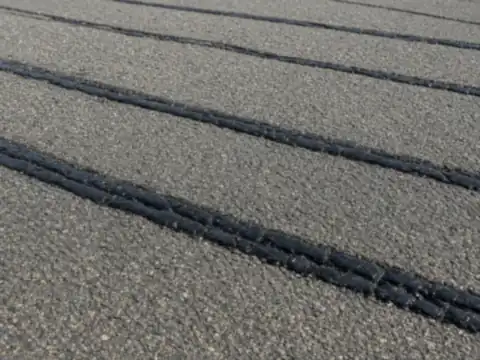
Cracks let water into the base, where it causes the real damage. Hot-applied rubberized crack sealant flexes with temperature changes and is the common commercial choice. Very wide cracks or areas of alligator cracking may need patching instead.
Patching and repairs
Failed areas, often near dumpsters, drive-thrus and drainage problem spots, are cut out and replaced with new asphalt. Sealcoat doesn't fix structural failure, so repairs should come first.
Striping and layout
Restriping keeps lines crisp and spaces clear. A layout change can sometimes add spaces or improve traffic flow. Fire lanes, crosswalks, arrows and stop bars are common additions. Waterborne traffic paint is typical; thermoplastic or other durable markings may suit high-wear areas.
Accessible parking compliance
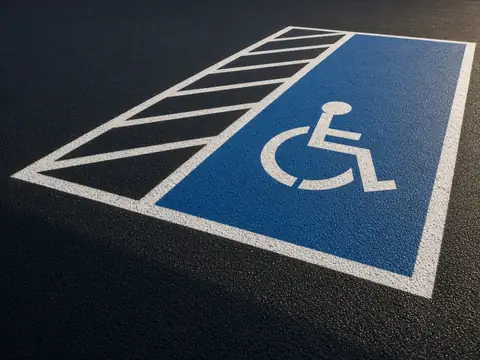
When restriping, confirm the required number of accessible and van-accessible spaces for your lot size, access aisle widths, signage and location relative to accessible entrances. A layout drawing helps when making changes.
Free matching service by Voraus LLC. We connect you with independent local sealcoating and striping contractors. We are not a sealcoating contractor and do not perform the work.
Common pavement maintenance requests
Commercial parking lot sealcoating
Cleaning, oil-spot treatment and one or two coats of sealer on office, retail, church, apartment and industrial lots.
Crack filling and sealing
Hot-pour rubberized crack sealant keeps water out of the base. It's usually done before sealcoating.
Patching and pothole repair
Cutting out failed areas and replacing asphalt so sealcoat goes onto a sound surface.
Parking lot striping and layout
Restriping existing layouts or redesigning layouts to add spaces or improve flow.
ADA accessible parking
Accessible spaces, access aisles, symbols and signage laid out to current standards.
Fire lanes, arrows and stencils
Curb painting, fire lane markings, directional arrows, crosswalks and custom stencils.
Residential driveway sealcoating
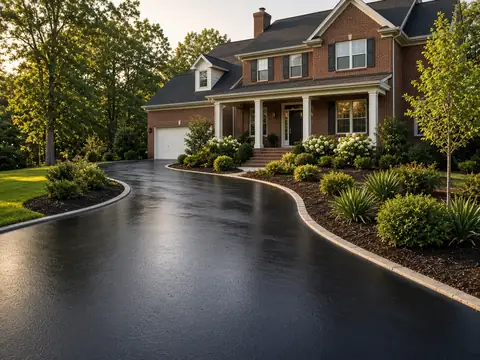
Driveway cleaning, crack filling and sealing for homes and HOA communities.
Maintenance programs
Scheduled sealcoat and striping cycles for property managers with multiple sites.
What affects the price
Square footage
Sealcoating is typically priced by area, so larger lots cost more in total but often less per square foot.
Condition and prep
Cracks, oil spots, potholes and raveling need repair before sealing. A lot in rough shape costs more to prepare.
Number of coats and product
Two coats last longer on high-traffic areas. Sealer type and additives also affect price and durability.
Crack filling quantity
Crack sealing is often priced by linear foot or pound of material, so heavily cracked lots add up.
Striping layout
Re-tracing existing lines costs less than a new layout. ADA spaces, stencils and curb painting add cost.
Scheduling and phasing
Lots that must stay partly open need phased work, sometimes on nights or weekends, which adds time and cost.
Ready to get your sealcoating project moving?
A short request is enough to get started: "Church lot, about 120 spaces, last sealed 5 years ago, needs crack fill, sealcoat and restripe, prefer a weekday in May."